A Colorado Guide to Supporting Pollinators

Updated: Jun 6

Having grown up in Colorado, I’ve always been drawn to the pockets of wilderness tucked between the peaks. Just a few hours from the urban area I call home, summer hillsides explode with wildflowers, something that has kept me rooted here.
But these landscapes aren’t just beautiful. They are part of a larger network of habitats that support pollinators, from native bees to migrating butterflies, that keep our ecosystems and food systems functioning.
And while that sounds like a distant conservation issue, it’s not.
Most of us live in neighborhoods, cities, or apartments, not alpine meadows.
That’s exactly where this matters.
Supporting pollinators doesn’t require wilderness. It starts in small, human spaces: balconies, gardens, parks, schoolyards, even roadside strips. In this post, I’ll walk through what pollinators actually are, why they matter in Colorado, and how you can meaningfully support them, starting right where you are.
Table of Contents


What Counts as a Pollinator (It’s More Than Bees)
Pollinators are animals that move pollen from one flower to another, fertilizing plants and allowing them to produce seeds, fruit, and new generations. They include:
Bees
Butterflies and moths
Flies and beetles
Birds like hummingbirds
Even some reptiles and bats in other parts of the world
Without them, many ecosystems and about one-third of our food system would collapse.

FUN FACT: At least 75% of flowering plants on Earth rely on animal pollinators, including more than 1,200 crop species and over 180,000 plant species (National Park Service).
Pollination isn’t just a biological process. It’s a foundation of life as we know it. Let’s meet some of Colorado’s most fascinating pollinators.
Meet Colorado’s Pollinators

Bumble Bees: Powered by pollen
Perhaps the most recognizable pollinators, aside from beloved butterflies, are the large, fuzzy bumble bees. Colorado is home to at least 24 species of bumble bees, and roughly 20% of them are of conservation concern (U.S Fish and Wildlife).
Bumble bees are famous for a behavior called buzz pollination. Bumble bees vibrate flowers to shake loose trapped pollen that would otherwise remain trapped inside the flower. Plants such as tomatoes, peppers, blueberries, and cranberries rely almost entirely on this process.
Bees are among the most effective pollinators because they evolved specifically to collect pollen as a protein source for their young. As they move from flower to flower, they unintentionally transfer pollen and help plants reproduce.
3 Native bumblebee species
Morrison Bumble Bee Southern Plains Bumble Bee Western Bumble Bee
Photos above credited to Colorado Parks and Wildlife: Morrison bumblebee, Southern Plains bumblebee, and Western bumblebee. All rights reserved

Solitary Bees: No hive, no problem
Most native bees in Colorado are solitary, representing nearly 950 species statewide. Unlike honey bees or bumble bees, solitary bees do not live in colonies. Instead, each female builds and provisions her own nest each season.
These bees are remarkable engineers. Some dig tunnels into the soil, while others nest in hollow stems, cracks in wood, or abandoned beetle burrows. Females create individual chambers for their eggs and protect them using materials such as mud, leaves, petals, or plant fibers.
Despite their small size, solitary bees are exceptionally efficient pollinators and play a major role in supporting Colorado’s native wildflowers and ecosystems.
Common solitary bees in Colorado include:
Mason bees (Osmia spp.) — known for using mud to seal their nests. The Colorado mason bee (Osmia coloradensis) is one example.
Leafcutter bees (Megachile spp.) — famous for cutting neat circular pieces from leaves to line their nesting chambers.
sweat bees Sweat bee pollinating
Sweat bees (Halictidae family) — often small and metallic green, including species in the Agapostemon genus.
Fun Fact: Honey bees were introduced to North America by European settlers in the 1600s, making them a non-native species. The vast majority of Colorado’s bees are native species (such as bumble bees and solitary bees) that evolved alongside the region’s native plants.
Butterflies: Delicate flight, essential work
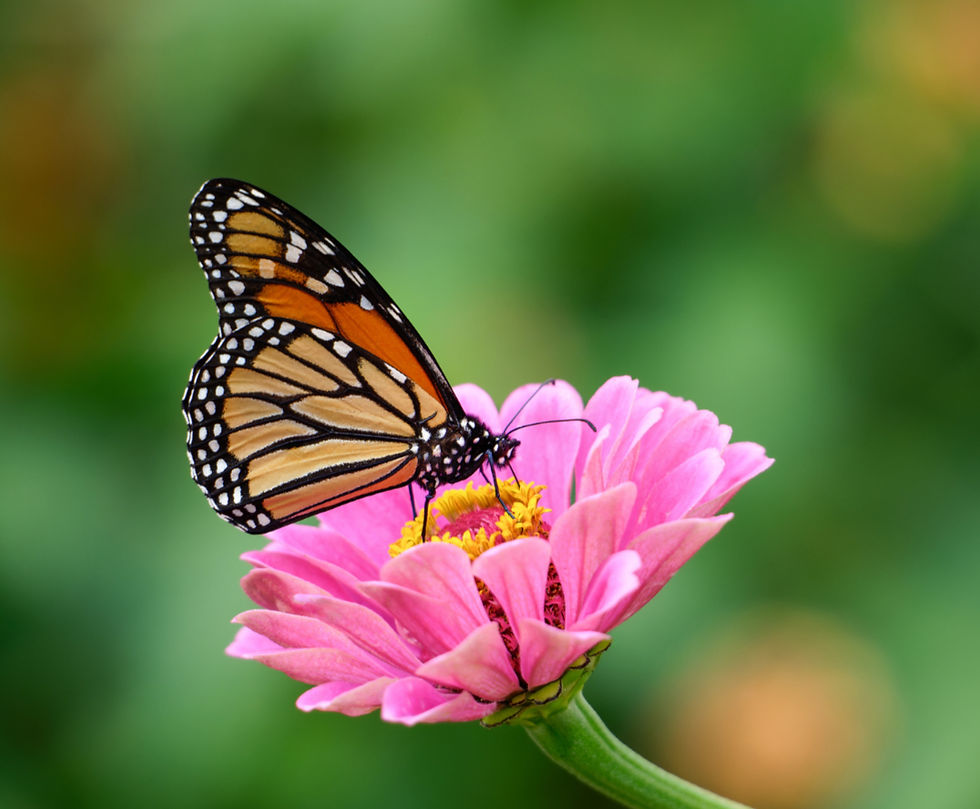
Colorado is home to more than 200 butterfly species. Butterflies pollinate differently than bees because they use a long, straw-like mouthpart called a proboscis to drink nectar from deep within flowers. As they feed, pollen sticks to their bodies and is carried to the next bloom.
One of the best-known examples is the Monarch butterfly. Monarchs lay their eggs exclusively on milkweed plants, which serve as the sole food source for their caterpillars. Without milkweed, monarch populations cannot survive, making native milkweed conservation essential across Colorado and North America.
Moths: Moonlight pollinators
Moths take on the “night shift” of pollination. While some species are active during the day, many are nocturnal and visit flowers after bees and butterflies have stopped foraging.
Colorado has nearly 3,000 moth species, many visiting plants that daytime pollinators never reach.
Research has shown that moths transport pollen from dozens of plant species, including some plants rarely visited by daytime pollinators (The Royal Society: Nocturnal Pollinators Study). This means moths play a larger role in ecosystem health than many of us ever realized.

Photo credit: Kaitlin Haase, Xerces Society, 2020. All rights reserved
Notable Colorado moths include migratory “miller moths” (the adult form of the army cutworm moth), sphinx moths, and yucca moths, which have a highly specialized relationship with yucca plants.
Hummingbirds, pollinating at 50 wingbeats per second
Although often overlooked in pollinator conversations, hummingbirds are incredibly important pollinators in Colorado’s mountain and foothill ecosystems. A single hummingbird may visit up to 2,000 flowers in one day while searching for nectar.
As they feed, pollen collects on their feathers and bills, allowing them to transfer pollen between flowers—especially tubular, brightly colored blooms such as penstemons and columbines (Colorado's state flower).

Wasps, Flies, and Beetles: The ecosystem’s underrated workforce
Not all pollinators are fuzzy or flashy. Many other insects contribute to pollination in unique ways.
Wasps are generally considered accidental pollinators. Adult wasps feed on nectar, similar to bees; however, wasp larvae are strictly carnivorous. Unlike bees, they lack dense body hairs for collecting pollen, but they still transfer pollen while feeding on nectar.
Flies fill specialized pollination roles for certain plants and are especially important in cooler or high-elevation habitats where bees may be less active. Some flowers even smell faintly rotten, specifically to attract flies.
Beetles are among Earth’s oldest pollinators, dating back to prehistoric times. They often pollinate ancient flowering plant lineages and are sometimes called “mess-and-soil” pollinators because they crawl directly across flowers while feeding.
Together, these often-overlooked insects help support biodiversity, healthy ecosystems, and food production throughout Colorado.
Why the Colorado Front Range Matters
The Front Range is the easternmost stretch of Colorado’s Rocky Mountains, where urban life and wild landscapes exist side by side. Cities like Denver, Boulder, Fort Collins, and Colorado Springs are in this region, which includes prairie, foothills, montane forests, and alpine systems. This dramatic range of habitats supports an equally diverse range of pollinator species.
It also serves as a major migration corridor.
Monarch butterflies, for example, pass through Colorado during their continental migration between Mexico and the northern United States. Even small habitat patches, roadside flowers, gardens, or balcony plants can help sustain them along the way.
But rapid population growth has led to habitat fragmentation, making connected green spaces more important than ever.
Why Are Colorado’s Pollinators Declining?
In 2022, Colorado launched a statewide study (Senate Bill 22-199) to understand pollinator decline. The 2024 findings identified four major drivers (Armstead et al., 2024):
Habitat loss and fragmentation
Pesticide exposure
Invasive and non-native species
Climate-driven timing mismatches
These pressures overlap, but importantly, so do the solutions.
If you are interested in learning more about these impacts, keep reading. Otherwise, click here to go to the action section, where you can get started supporting pollinators!
1. Habitat Loss and Fragmentation
As cities expand and landscapes are developed for agriculture, housing, roads, and commercial spaces, pollinator habitat becomes increasingly fragmented. Since 1982, Colorado has added an estimated 2.5 million residents, resulting in the loss of 1,038 square miles of natural habitat for new developments throughout the state (Numbers USA, 2022).
Many urban areas and monoculture crop fields provide very few food sources, nesting opportunities, or safe migration corridors for native pollinators. Instead of moving through connected ecosystems, pollinators are often forced to travel farther distances between isolated pockets of habitat. For small species with limited energy reserves, this fragmentation can be devastating.
Creating connected habitats, even on a small scale, can make a difference. Native gardens, flowering medians, balcony planters, school gardens, and pesticide-free yards can all act as “stepping stones” that help pollinators move through urban landscapes more safely.
2. Pesticide Use
Pesticides, herbicides, fungicides, and insecticides are among the leading drivers of insect decline worldwide. While these chemicals are often intended to target a single pest species, they can unintentionally affect a wide range of beneficial organisms. Research from the Xerces Society has found pesticide residues in the vast majority of pollen samples from beehives and even in stream systems, showing how far these chemicals travel beyond their intended use (Xerces Society, 2026).
These substances can harm pollinators by:
Reducing reproduction
Disrupting navigation and memory
Interfering with foraging behavior
Weakening immune systems
Reducing overall plant and insect diversity
Pollinators may encounter pesticides through:
Contaminated pollen and nectar
Treated garden plants
Soil and groundwater exposure
Drift from nearby spraying.
Reducing pesticide use, or switching to more targeted, low-impact approaches, can significantly improve habitat quality for pollinators in both urban and agricultural environments.
3. Invasive and Non-Native Species
Non-native plant species compete with Colorado’s native vegetation, reducing the diversity of plants available to pollinators. While some ornamental garden plants may provide nectar, many do not offer the same nutritional value or ecological relationships as native plant species in Colorado’s ecosystems.
Invasive weeds can also alter soil conditions, crowd out wildflowers, and change entire ecosystems over time.
Protecting native pollinators means considering the full ecosystem: the plants, insects, soils, water sources, and seasonal timing that evolved together here in Colorado.
4. Climate Mismatch
Pollinators and plants evolved together over long periods of time, often syncing their life cycles very closely. But climate change is beginning to disrupt that timing.
Warmer temperatures and shifting seasonal patterns can cause flowers to bloom earlier or later than usual. At the same time, pollinators may emerge based on environmental cues such as soil temperature, daylight length, or snowmelt timing.
This creates what scientists call a climate mismatch, a situation where pollinators emerge when the flowers they depend on are not yet blooming, or where flowers bloom before pollinators are active (Armstead et al., 2024).
Maintaining diverse landscapes with blooms throughout the growing season can help buffer some of these effects by ensuring food sources remain available over longer periods of time.
What makes these threats encouraging to address is that the solutions are often interconnected.
Pollinator conservation doesn’t require perfection. It requires participation.
Real, Actionable Ways to Help Pollinators in Colorado
Below are four tiers of actions to support pollinators along the Front Range and beyond. Whether you have a balcony, backyard, schoolyard, or larger property, there’s a way to participate in pollinator conservation.
Start with one action that feels doable and interesting, then stick with it and observe what changes. Conservation begins with curiosity and often grows into a community.
Tier One: Native Plant Gardening & Curating Outdoor Spaces

Plant Native Species (Not Just “Wildflowers”)
One of the most impactful things you can do for Colorado’s pollinators is plant native species. While colorful “wildflower mixes” may look pollinator-friendly, many contain non-native plants that provide little value to local ecosystems.
So What Is a Native Plant?
Native plants are species that evolved in Colorado over thousands of years alongside local insects, soils, climate, and wildlife. Over time, many pollinators became tightly linked to these plants for food and reproduction. In some cases, native species cannot fully use non-native ornamental plants, meaning that when native plants disappear, certain pollinators disappear too.

Native plant gardens do far more than look beautiful. They provide:
Nectar and pollen for bees, butterflies, moths, flies, and hummingbirds
Host plants for butterfly and moth caterpillars
Shelter and nesting habitat for solitary bees and other insects
Food sources that bloom throughout Colorado’s growing season
Important “rest stops” for migrating pollinators moving through urban landscapes.
They are also often lower-maintenance, requiring less water, fertilizer, and chemical inputs (Sholne et al., 2017).
Here’s an easy place to start:
Pick a spot in your yard or on your balcony to plant a garden or put out a few pots.
Find places that sell native plants: Locate one here.
Pick a few Colorado native plant species you like, or use my recommended starter list below.

Ask a plant nursery staff member to help you locate your list of plants and ask them what soil they would recommend for native species. Also, ask about pesticide use at the nursery.
Plant seeds or starter plants in a garden bed, container, or backyard, depending on your location and the plants' sunlight needs.
Leave your plants be (avoid using chemicals on them)
Observe which pollinators visit throughout the season.
Here is a written-out list of the above species you can start with and how they support different native pollinators:
Pasque Flower (Pulsatilla vulgaris) – early spring bees
Golden Currant (Ribes aureum) – bees, hummingbirds, early-season support
Rocky Mountain Penstemon (Penstemon strictus) – bees and hummingbirds
Blanket Flower (Gaillardia aristata) – long summer bloom, drought-tolerant
Showy Milkweed (Asclepias speciosa) – monarch host plant
Rocky Mountain Bee Plant (Cleome serrulata) – late-season nectar source
These native plants work especially well because they bloom at different times throughout spring, summer, and fall, helping create a season-long source of nectar and pollen rather than a garden that peaks for only a few weeks. This is called phenology, the timing of seasonal events like flowering and migration.
That’s it. Small changes still matter. A single native plant patch can support dozens of insect species.
Want to create an even larger garden or find a comprehensive guide to native plant gardening? Jump to the end of the blog, here!
Leave the Leaves
One of the simplest ways to support pollinators is to leave parts of your yard a little “messy.” Cleaning dead plants in gardens too early in spring can accidentally destroy overwintering pollinators before they emerge.

Many native insects overwinter inside:
Hollow plant stems
Dead flower stalks
Leaf litter
Soil and grass clumps
Wait until temperatures are consistently above 50°F in late spring before removing heavy leaf litter or dead stems.
Similarly, mowing less frequently in spring allows early flowers and grasses time to bloom before summer landscaping begins.

Photo Credit: Xerces Society. All rights reserved
Add Water
Pollinators need water just like any other animal.

A shallow dish filled with stones, pebbles, or sticks creates a safe place for bees and butterflies to land and drink without drowning. Even a tiny water source can make a difference during Colorado’s hot, dry summer.
Build a pollinator water source here.
Tier 2: Rethink Pesticide Use
Pesticides, including insecticides, herbicides, and fungicides, don’t just target pests; they can also harm bees, butterflies, moths, beetles, and other beneficial insects that keep ecosystems balanced.
Even “garden safe” products can negatively impact beneficial insects.
The encouraging part: Creating a healthier, more native plant–focused yard naturally reduces pest problems and the need for pesticides in the first place.
How to know if you need pesticides?
Here is a great resource from Xerces Society on how to identify garden pests and remove them naturally!
If You Do Need Pesticides.....
Sometimes intervention is necessary, especially for invasive species or severe infestations. If that’s the case, there are ways to reduce harm to pollinators!
Pollinator-Safe Guidelines
Avoid spraying flowers or pollinators directly.
Use targeted products instead of broad-spectrum or “3-in-1” chemicals.
Spray only when pollinators are inactive (evening or night)
Use spot treatments instead of widespread applications whenever possible.
The goal is reduction, not perfection. Most yards become more balanced, diverse, and pollinator-friendly when chemicals are used less and observation comes first.
Tier 3: Advocacy
While individual action matters, larger-scale conservation also depends on policy and community support. Supporting pollinators doesn’t stop in the garden. One of the most impactful things you can do is use your voice as a voter, community member, and advocate.
Local and statewide policies influence:
Habitat protection
Pesticide regulations
Water usage
Urban development
Funding for conservation and research
Protection for rare plants and invertebrates
In Colorado, pollinators and many other invertebrate species historically received far less conservation attention than mammals or birds. In fact, Colorado Parks and Wildlife was not formally granted authority to manage and conserve many pollinators, rare plants, and non-game invertebrates until recent legislation in 2024 expanded protections and research capabilities (Armstead et al., 2024).
That progress happened because people advocated for it.
Find resources for staying informed on Colorado environmental conservation below:
Colorado Environmental Health Coalition
This resource highlights several active bills that you can advocate for. This is hosted through People and Pollinators Action Network.
Colorado Secretary of State ballot findings page for 2026
Educate yourself on what will be featured on our upcoming ballots.
Conservation Colorado about page
An advocacy organization dedicated to securing a healthy environment for Colorado.
Colorado Department of Transportation programs page
Has a quick link area on the side to stay up to date on various programs in Colorado, including the Pollinator Highway.
Purchase a Colorado Protect Pollinators license plate.

When you purchase a Colorado Protect Pollinators license plate, you directly support the Pollinator Habitat Program in Colorado. Over the past four years, these plates have helped generate more than $165,000 in habitat funding, supporting over 65 acres of pollinator habitat across the state (People and Pollinators Action Network, 2026).
Support Local Conservation Organizations
Conservation work requires collaboration, funding, education, and community support. Colorado is home to many organizations doing incredible work for pollinators and native ecosystems.
Here are a few organizations making a difference for pollinators in Colorado
Part of my own pollinator advocacy work has been supported through Cheyenne Mountain Zoo. A team of us collaborated on the Pollinator Membership Vote Grant, which received $20,000 in funding to support local pollinator science, education, and conservation projects.
Your vote for pollinators is a catalyst for local change!
The Colorado Native Plant Society is a nonprofit dedicated to the conservation, appreciation, and restoration of Colorado’s native plants and habitats. Through education, outreach, and community engagement, it helps Coloradans learn about and protect the native plants that support local wildlife and pollinators.
Based in the Denver metro area, Butterfly Pavilion is a leader in invertebrate education, pollinator conservation, and community science throughout Colorado and beyond.
Monarch Joint Venture coordinates pollinator conservation projects across the United States, providing tools and resources for communities, farmers, educators, and conservationists working to protect monarch butterflies and other pollinators.
Tier 4. Citizen Science: Get Involved Locally
One of the most powerful conservation tools is simple observation.
You don’t need to be a scientist, just someone who pays attention. Scientists can’t be everywhere, and citizen science helps fill critical gaps in our understanding of pollinator populations, migration, habitat use, and seasonal patterns.
In Colorado, monarch conservation efforts rely on community-collected data to track monarchs and milkweed across the state and guide where conservation action is most needed.

If you already hike, garden, birdwatch, or walk your neighborhood, you’re already part of this process. Simply documenting what you see, often as easy as taking photos and uploading them to a platform, can directly support conservation research.
Citizen Science Projects Worth Exploring
Upload photos of bumble bees to help researchers track populations and distribution across North America.
A more hands-on community science project where volunteers complete training and survey designated areas for bumble bees throughout the season.
This project focuses on monitoring milkweed patches for monarch eggs and caterpillars during migration and breeding seasons.
Colorado Parks and Wildlife offers opportunities in habitat restoration, wildlife monitoring, education, and citizen science projects—including butterfly and pollinator monitoring programs.
One of the easiest ways to support biodiversity research is by uploading observations of pollinators and plants to iNaturalist. These observations help scientists track species distributions, seasonal activity, migration timing, and conservation priorities.
When uploading observations, avoid publicly sharing precise locations for sensitive or threatened species whenever possible.
The collective observations of everyday people can genuinely shape conservation outcomes.
A single photo uploaded from your backyard or a hiking trail could become part of a much larger story about protecting Colorado’s biodiversity.
Why This Matters
Pollinators influence nearly every aspect of our lives, whether we notice them or not. They support biodiversity, healthy ecosystems, agriculture, and food security. In fact, roughly one out of every three bites of food we eat depends on pollination.
But beyond their ecological importance, pollinators also connect people to nature in deeply personal ways. A butterfly landing in your garden, the sound of a hummingbird passing by, or spotting a bumblebee on a hiking trail can inspire curiosity, wonder, and appreciation for the natural world.
Feeling Overwhelmed? Start With One Thing.

At this point, you might be thinking: Okay… where do I even begin?
Pollinator conservation can sound overwhelming at first, but it does not have to be. The best conservation action is often the one that genuinely fits your interests, lifestyle, and available time.
Where I’m Starting
By now, you’ve probably realized that I genuinely love pollinators and the conservation work surrounding them. But the truth is, I am still very much a beginner in this space. I’m only just beginning to understand the incredible diversity of pollinators, the threats they face, and the many ways people can help protect them.
And honestly? Entering the world of pollinator conservation can feel overwhelming. There is so much information online that it can be difficult to know where to start, what sources to trust, or what actions actually make a difference.
That’s one of the biggest reasons I wanted to write this post. As I continue learning, researching, attending trainings, and collecting helpful resources, I wanted to create a place where I could organize that information into something approachable and useful for others.
I hope this can serve as a starting point for anyone curious about pollinators but unsure where to begin, without needing to spend hours every day digging through research papers and websites.
What I’m Focusing on This Season
Pollinator grant
Two colleagues and I were awarded a $20,000 pollinator conservation grant through Cheyenne Mountain Zoo to support monarch research and community conservation in Colorado. Most of my time this season is focused on that project, alongside the following efforts.
Bumblebee atlas surveying
I recently completed training for Bumble Bee Atlas, and I’m excited to begin surveying bumble bees along the Front Range this season.
Monarch conservation training
I’ve also signed up for several monarch-focused courses through Monarch Joint Venture and the Nectar Hub, including the Monarch Essentials Course, Monarch Tagging Course, and Monarch Larva Monitoring Project Training.
So yes… There will probably be a lot of monarch content in my future.
Adding native plants to my garden
I also recently planted milkweed in my garden! I am not a master gardener, so it's a humble start :)
This is simply where I’m starting, and I hope that encourages you to start somewhere, too.

One of the reasons I care so deeply about pollinator conservation is that it is accessible. You do not need to be a scientist, own land, or work in conservation professionally to make a difference.
And perhaps most beautifully, pollinators remind us how connected ecosystems truly are.
Migration routes, flowering seasons, and biodiversity extend far beyond state or national borders. The monarch butterfly traveling through Colorado may continue into Mexico.
The flowers blooming in your yard may fuel a native bee for the next stretch of its journey.
Small actions matter because ecosystems are built from countless small connections working together!
My Recommended Resources for you!
Resources for gardening and native plants
Native Plant Guides for Colorado from Xerces Society
Colorado Rocky Mountains Native Plants Guide (including Front Range):
Not in Colorado? Search for your guide on this page.
Front Range and Foothills- Extensive Native Plant Guide
I would highly recommend this if you are interested in creating a large-scale, high-impact pollinator garden.
Mountain Region Pollinator Conservation Guide-Xerces Society
Helpful landing page for habitat installation, gardening, native plants, and other local conservation impacts for pollinators
Where to buy native plants MORE INFORMATION TO COME
Native plant vendor search- Xerces Society
More information about native plants- Colorado Native Plant Society
Resources for rethinking pesticide use
Managing Pests While Protecting Pollinators-Xerces Society
A guide to identifying pests and using natural remedies to combat them
Rethinking Weed Management at Home-Xerces Society
A helpful resource for avoiding herbaceous pesticides
Using Beneficial Insects in Your Garden- Xerces Society
A guide to using beneficial insects in your garden to naturally manage pests
The ultimate guide to pollinator conservation in Colorado
References
Armstead, S., Carper, A., Davidson, D., Blanchard, M., Hopwood, J., Larcom, R., Black, S., Briles, C., Irwin, R., Jolma, G., Resasco, J., Davis, S., Mola, J., & Inouye, D. (2024). Colorado native pollinating insects health study. Colorado Native Pollinating Insects Health Study
National Park Service. (n.d.). What is a pollinator? U.S. Department of the Interior. National Park Service: What Is a Pollinator?
NumbersUSA. (2022, September 7). Urban sprawl and population growth are chief concerns for Colorado voters, finds new poll. PR Newswire. PR Newswire Article
Shonle, I., Daniel, N., Davidson, D., Crick, S., Tolstrup, J., Turner, J. L., & Yarger, A. (n.d.). Native plants for Colorado landscapes: Front Range. Colorado Native Plant Society. Colorado Native Plant Society PDF
Walton, R. E., Sayer, C. D., Bennion, H., & Axmacher, J. C. (2020). Nocturnal pollinators strongly contribute to the pollen transport of wild flowers in an agricultural landscape. Biology Letters, 16(5). Royal Society Publishing: Nocturnal Pollinators Study
Xerces Society for Invertebrate Conservation. (n.d.). The risks of pesticides to pollinators. Xerces Society. Xerces Society
Xerces Society for Invertebrate Conservation. (n.d.). Wild bees and endangered species.Xerces Society – Wild Bees and Endangered Species
Xerces Society for Invertebrate Conservation. (n.d.). Endangered beetles. Xerces Society – Endangered Beetles
Xerces Society for Invertebrate Conservation. (2024). Don’t spring into garden cleanup too soon. Xerces Society – Don’t Spring Into Garden Cleanup Too Soon

Comments